
At a time when the real estate market offers many investment opportunities, apartments in historical buildings stand out as a particularly interesting option. While new construction is growing on the outskirts of cities, historical buildings in the center are gaining new life thanks to careful revitalizations. Is buying an apartment in a historical building in Poznań actually a good investment idea? Let’s take a look at the arguments in favor of this choice.
Financial aspects of investing in an apartment in a historical building
Potential for value growth
The history of the real estate market shows a clear trend – apartments in historical buildings after revitalization gain value faster than standard units in new buildings. This is due to several factors:
- The supply of historical buildings is drastically limited. Unlike new projects, the number of which is constantly growing, the amount of historical buildings in city centers is finite. This natural scarcity translates into price stability even during periods of market fluctuations.
- Professional revitalization of a historical building increases the value of not only the building itself, but often the entire neighborhood. A domino effect is noticeable – the renovation of one historical building encourages similar activities in the neighborhood, gradually increasing the attractiveness and prestige of the entire area. In Poznań, this process is perfectly visible on the example of Jeżyce or the area around Taczaka Street, where apartment prices in revitalized historical buildings over the last 5 years have grown by 30-40% more than the market average.
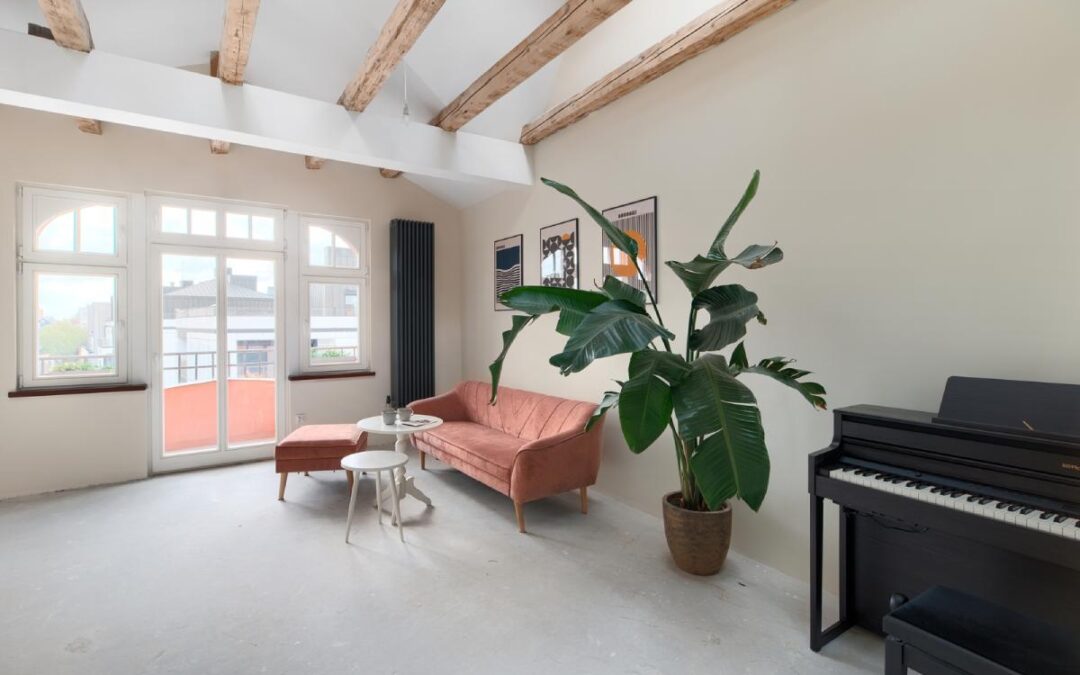
- The value of historical architecture and authentic details cannot be recreated in new construction. High ceilings, stuccowork, wooden floors, or original woodwork – these elements give apartments in historical buildings a unique character that gains value over time instead of losing it.
Rental attractiveness
Apartments in historical buildings enjoy exceptional popularity among tenants, which translates into higher rental rates and a lower risk of vacancies:
- The city center location is a magnet for students and young professionals who value proximity to universities, offices, cultural institutions, and dining options. In Poznań, apartments in historical buildings near the Old Town, the University of Economics, or the Poznań University of Technology can bring up to 15-20% higher rental rates than apartments of similar size on the outskirts.
- The unique character of the interiors attracts tenants looking for spaces with a soul. While standard developer apartments are often difficult to distinguish from one another, every apartment in a historical building has its own personality. This allows owners to gain an advantage in the rental market and maintain stable occupancy even in less favorable market periods.
- What is important, the changing style of work and the growing popularity of the hybrid model mean that tenants attach greater importance to the quality of the living space. High ceilings, large windows, and spacious interiors of historical buildings ideally meet these expectations, offering comfortable conditions for both living and remote work.
Cost optimization thanks to revitalization
One of the myths associated with historical buildings is their supposedly high maintenance costs. Meanwhile, professionally revitalized buildings offer solutions that optimize operating expenses:
- Comprehensive modernization of installations (electrical, water, heating) and thermal insulation of the building translate into significantly lower heating and utility bills. In the case of historical buildings with modern solutions, such as heat pumps or recuperation, savings can reach up to 30-40% compared to unmodernized buildings.
- It is worth noting that the housing association maintenance fees in revitalized historical buildings are comparable to charges in new buildings. For example, in our projects in Poznań, the average fee is about 5.50 PLN/m² – an amount close to that in new multi-family buildings, and often even lower than in some prestigious developer estates.
- Additionally, the use of modern technologies, such as photovoltaic panels powering common areas, allows for long-term reduction of operating costs. Thanks to this, contrary to popular opinion, a well-revitalized historical building can be just as economical to maintain as a new building.
Competitive advantages of apartments in historical buildings as an investment
The value of location
The unique location is one of the strongest investment advantages of apartments in historical buildings:
- Historical buildings are most often located in the strict city centers, which are characterized by complete urban infrastructure, excellent communication, and proximity to key institutions. In Poznań, historical buildings in the imperial district, in Jeżyce, or near Stary Browar are particularly sought after – locations whose value has consistently grown for decades.
- Restrictions related to the development of city centers mean that the supply of new apartments in these locations is very limited. Unlike the suburbs, where new housing estates are constantly being built, no significantly new buildings will appear in the center. This natural barrier to entry protects the value of investment in historical buildings against oversupply.
- Importantly, a center location also means resilience to changes in urban trends. While the popularity of individual suburbs may change with the development of the city, the historic center always remains a point of reference and retains its value.
Uniqueness as a value-stabilizing factor
The uniqueness of apartments in historical buildings is not only a matter of aesthetics, but also a solid investment argument:
- Authentic elements of historical architecture are impossible to recreate in new construction without incurring huge costs. Contemporary buildings inspired by the retro style will never achieve the historical value of the original buildings from the turn of the 19th and 20th centuries.
- This uniqueness translates into resilience to market fluctuations and oversupply. While identical apartments in new estates must compete on price, apartments in historical buildings stand out on their own, allowing them to maintain a stable value even in periods of market slowdown.
- Additionally, the growing interest in authenticity and character in architecture favors investments in historical buildings. We observe a clear trend of returning to appreciating craftsmanship, detail, and history, which directly translates into an increase in the value of revitalized historical buildings.
Future-proof investment
Looking long-term, apartments in historical buildings fit into key trends that will shape the real estate market in the coming decades:
- The revitalization of existing buildings is an action fully in line with the principles of sustainable development. In the face of growing environmental awareness and regulations limiting CO2 emissions, the renewal of existing buildings instead of building new ones is gaining importance. Historical buildings after comprehensive thermal insulation can meet modern energy standards with a significantly smaller carbon footprint than new construction.
- Changes in the style of work and the growing popularity of the hybrid model make the quality of living space a priority. Spacious interiors of historical buildings with high-set windows providing excellent lighting perfectly meet the needs of people working remotely.
- In the context of aging European societies and demographic changes, investments in city centers remain the safest. It is the centers that will be the least affected by a potential population decline, retaining their value and attractiveness regardless of demographic trends.
Summary
The financial, locational analysis and long-term prospects clearly indicate that an apartment in a revitalized historical building can be an exceptionally beneficial investment. The combination of unique character, prestigious location, and growing interest in authentic urban spaces means that this type of property offers not only stability, but also above-average potential for value growth.
Compared to new developer apartments, well-renovated historical buildings stand out due to limited supply, unique character, and a location whose value consistently grows. Additionally, professional revitalization ensures modern comfort while maintaining historical character, which translates into attractiveness for tenants and future buyers.
Investing in an apartment in a historical building is a choice that combines financial safety with the philosophy of sustainable development. By restoring life to historical buildings, we not only gain a unique property with a stable value, but also contribute to preserving the architectural and cultural heritage of the city.